Drink the Radioactive Gatorade
I posted something on Twitter last week:
"My best description of the current moment is that a small subset of the population just realized they can drink radioactive Gatorade and get superpowers, and everybody else is pretending it's 2019."
A couple of friends have quoted it back to me in conversation since, which usually means something landed. But a few people also asked me what I meant. So let me clear that up.
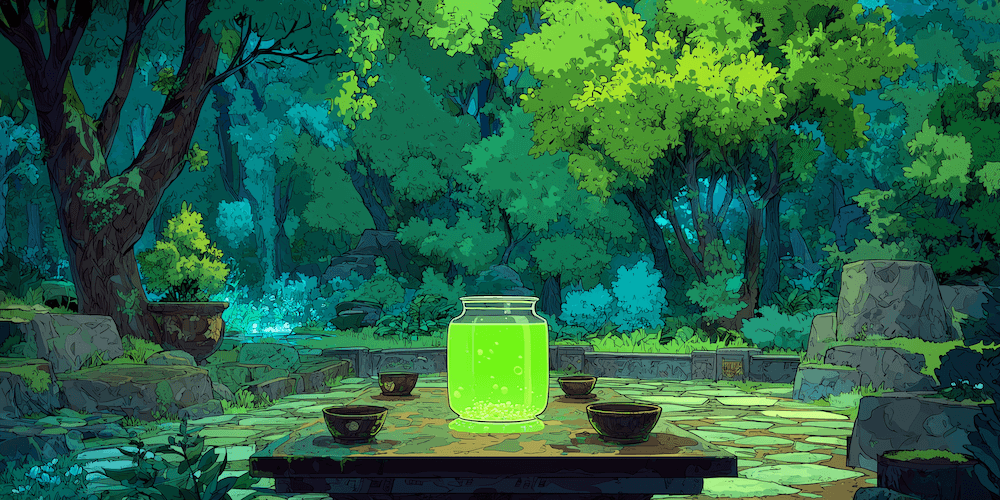
There's this moment in superhero origin stories where a regular guy encounters something radioactive: a spider, a vat of glowing chemicals they somehow survive, you know the drill. The point is that afterward, they have superpowers. Right now, there is some survivable radioactive gatorade sitting on the table for the drinking. A few of us have drank the gatorade. We have survived. And it feels like we have superpowers.
I've been working in or adjacent to the tech industry for sixteen years. And I've never had more fun in my professional life than I'm having right now. The reason is a specific experience I keep having that I've never had before: I wonder if I can do something, I try it, and it works.
I've always loved design but never been a designer. My friend Carrie says I can still call myself a designer though. Anyway, I'm probably a six or seven out of ten at it. There are countless people better than me, you know, real professionals. But because I invested enough skill points in design over the years, I have the language to tell a computer what I want it to make. And it makes it. By talking to it. And I don't get why people aren't floored when I tell them that.
There's this explosive creative freedom to realizing you can just make stuff on your own when before you had to try to explain it to other people, write PRDs, have meetings, file issues in GitHub, and even argue to get something to show up in a browser just the way you "saw" it in your head.
And it's not just designing and coding. I've also been playing around with how I write. When before I'd stare at my cursor as it taunted me with a blank page and a first sentence I'd inevitably hate, delete, and rewrite a million times, I now start by dictating ideas like I'm Churchill in bed minus the cigar and the day drinking. I dictate, I have Claude generate me a first draft. From there, the possibilities are endless.
I can ask Mr. Claude to cross reference my draft with notes I've saved over the years, ask for academic research that challenges or supports my theories. I've also taken my five favorite books on how to be a great writer, had Ser Claude create condensed references for each in markdown, and now I ask, "If John McPhee read this draft, what might he say about it?" And then, "If Bill Zinsser now read my draft, what would he say?"
And it tells me. And I improve my writing. And most importantly, the whole time I'm just grinning ear to ear because it's so much goddamned fun.
All of this runs on a $100-a-month subscription. I get that $100 isn't chump change, but it's also a hell of a lot cheaper than a $10,000 / month developer. Which I know is going to freak some people out, especially developers. I'll get to that in a second.
But before that, there was this guy a while back who very few normies know about. This man was Doug Engelbart and he had a name for the radioactive gatorade, and that name was augmented intelligence. His vision was a future where we let humans do what humans are great at and let machines do what machines are great at. That's what this moment feels like when you're inside it. The machines are now really, really good at things that used to be expensive, that used to require hiring people, that used to take weeks. And that frees you up to do the parts that only you can do: the taste, the judgment, the weird creative instinct that says "what if I tried this?"
So why is everybody else pretending it's 2019?
I don't mean that in a judgmental accusatory way. I mean like, why might people not be getting this?
People are looking at these tools through one of two lenses. The first: it's not actually that good. The only people saying that are the people who aren't using the best models. The frontier models are very, very good. The second: it's going to be so good that people are wondering where they'll get their income and, more existentially, where they'll find their sense of meaning and purpose.
I have real empathy for both. I think about my own work every day. I'm a coach and an advisor to startup founders. How much longer until people would rather talk through their problems with an AI than with me? I use Claude for advice regularly. I understand the existential weight of watching a machine get better at something you've built your identity around.
And I promised I'd come back to developers. If you've spent your career writing code, and writing code is a core part of how you think of yourself, I get why this moment feels threatening and disorienting. The shift from coding to coordinating agents and workflows is a big one. But at the core, I think, writing software was a means to make things. And making things is still very, very possible. More possible than ever, really. We can now augment our intelligence with Mr. Claude or Mr. Codex and build things at a speed and of a scope we could not six months ago.
There's a classic argument that every major technological shift, from electricity to the internet, destroys some jobs and creates an explosion of new ones. There's a fear this time that this time is different. I think that fear may be well placed. I don't know. Nobody does. Maybe this wave will be like the others and lots of new jobs and wealth and consumption will come out of this. Perhaps Mr. Andreessen will be correct. Seriously, who knows. Really. I'm not here to call a verdict on whether we're heading toward something cyberpunk and dystopian or something solarpunk and expansive.
But here's what I do know: right now, things are possible that weren't possible three months ago. Tools that six months ago cost tens of thousands of dollars and required you to hire people are now available for the cost of a nice dinner. Whether you want to learn, make, or build, there is pure creative power at your fingertips.
You can choose not to drink the gatorade. And I want to be clear: there's nothing wrong with that. In every other technological revolution, we learned to make things with machines that we couldn't make before, and every time, the handmade version became more valued, not less. Nobody's table is handmade anymore, unless you're rich I guess. The people who still make furniture by hand are doing something admirable, and we pay a premium for it. Same with a handmade suit. Choosing to write without AI, to build without AI, to create entirely by your own hand is a legitimate and respectable choice.
But if you're not making that choice deliberately, if you're just hesitant or a little spooked, I think you owe it to yourself to lean in and try. You might find you'd rather make things by hand. But I think you're going to discover complementary skills you didn't have before, access to tools that shorten the distance between an idea and a finished thing, and a feeling of creative possibility that is worth the couple of weekends it takes to find your footing.
I don't know what the future holds. But anyone who thinks of themselves as creative and isn't leaning in right now is doing themselves and the world a disservice, by leaving beautiful things uncreated.